

Famous Lines from Literature
We've turned the pages of famous books to compile this trivia game full of classic literary quotes.
15 questions · Published April 14, 2025
Trivia questions (5 of 15)
- Multiple Choice
1. In which Dr. Seuss classic does a nameless character insist: "I do not like them, Sam-I-Am"?
FUN FACT
Published in 1960, "Green Eggs and Ham" was born from a $50 bet between Dr. Seuss and his publisher Bennett Cerf, who challenged the author to write an engaging children's book using only fifty distinct words.
- Multiple Choice
2. In which classic children's book does the titular character say: "You have been my friend. That in itself is a tremendous thing."?

In the final moments before her death, the titular spider from the 1952 children's classic novel "Charlotte's Web", written by E.B. White, explains to Wilbur the pig that she is grateful for his companionship.
- Multiple Choice
3. What author's satirical novella features the line: "All animals are equal, but some animals are more equal than others"?
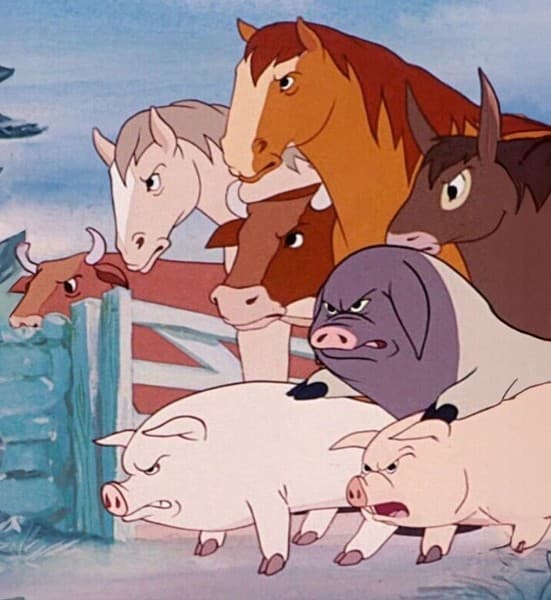
The famous line, "All animals are equal, but some animals are more equal than others," comes from George Orwell's satirical novella "Animal Farm," published in 1945. Orwell crafts a political allegory based on the rise of Stalinism in the Soviet Union and critiques the corruption in pig Napoleon's regime, with a pig standing in for Stalin.
- Multiple Choice
4. Who utters the cruel phrase: "Off with their heads" in Lewis Carroll's "Alice's Adventures in Wonderland"?
In Lewis Carroll's whimsical novel "Alice's Adventures in Wonderland", the ruthless Queen of Hearts frequently declares the order "Off with their heads!"
The novel, first published in 1865, is filled with oddball characters and delightful nonsense that, despite appearing as a simple children's book, offers cleverly intertwined themes of power and absurdity.
- Multiple Choice
5. What is destroyed in the 1953 dystopian novel "Fahrenheit 451," which opens with the words: “It was a pleasure to burn"?

In Ray Bradbury's 1953 dystopian novel "Fahrenheit 451," the primary focus is on the destruction of books. The novel presents a future where books are banned, and "firemen" are tasked with burning any that are found. The title references the temperature at which paper supposedly ignites (~451 degrees Fahrenheit), highlighting the central role of book burning in the storyline.
10 more questions in the full game
Access the full game with one of our downloads.
See download options