

Missing Ingredient
These famous dishes and drinks aren't complete without a crucial missing ingredient. Are you savvy enough to know it?
15 questions · Published September 22, 2025
Trivia questions (5 of 15)
- Multiple Choice
1. Along with white rum and lime, what is another key ingredient in a classic "Mojito" cocktail?
A key ingredient in a classic Cuban Mojito highball cocktail, alongside white rum and lime, is fresh mint. Legends say the drink dates back to the 16th century when bartender Pedro Chicote mixed it up in Havana - often said to be a way for sailors to mask the bad taste of the eau-de-vie they carried.
- Multiple Choice
2. If you order "Pad Thai" at an Asian restaurant, you can look forward to seeing ___________ your plate.
Pad Thai is a popular Thai menu item that predominantly features stir-fried rice noodles. The word "pad" means "stir-fried," and the dish includes ingredients such as eggs, protein choice like shrimp or tofu, bean sprouts, peanuts, and lime, adding a perfect combination of flavors and textures.
- Multiple Choice
3. Which type of bun is featured in McDonald's signature Big Mac burger?

FUN FACT
The McDonald's Big Mac, which according to its iconic jingle features two all-beef patties, special sauce, lettuce, cheese, pickles, onions on a sesame seed bun, is famously used by The Economist in the "Big Mac Index" to compare purchasing power parity between countries.
- Multiple Choice
4. What is the main flavor of a "Mounds" candy bar?

Mounds bars are known for their delicious coconut filling coated in rich dark chocolate. Introduced by the Peter Paul Candy Manufacturing Company in 1920, the candy has sibling called Almond Joy, which contains the same coconut filling but adds almonds on top and covers everything with milk chocolate.
"Sometimes you feel like a nut and sometimes you don't."
- Multiple Choice
5. What ingredient provides the vibrant green color of traditional Italian pesto sauce?
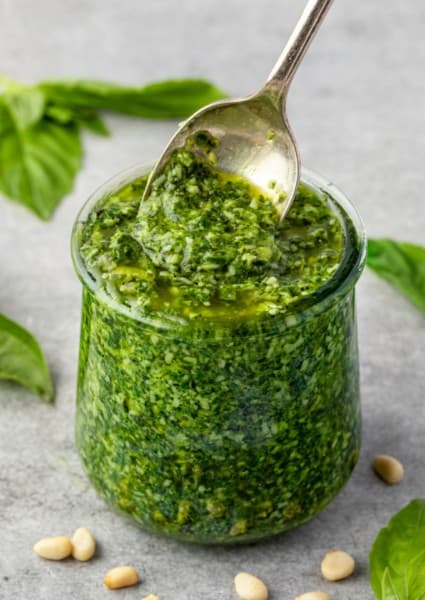
The vibrant green color of traditional Italian pesto sauce comes from basil, an aromatic herb that's essential to authentic Genoese pesto. Originating from Genoa in the Liguria region of Italy, pesto's name is derived from the Italian word "pestare", which means "to crush" or "to pound", referring to the classic method of preparing pesto with a mortar and pestle.
10 more questions in the full game
Access the full game with one of our downloads.
See download options